
Laparoscopic
cholecystectomy
Overview
A cholecystectomy (gallbladder removal) is the definitive treatment for all problems related to the gallbladder and for complications of gallstones.
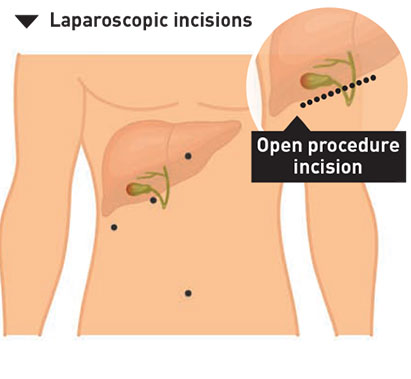
The procedure
The laparoscopic cholecystectomy procedure is performed under general anaesthesia and usually lasts 60 to 120 minutes. Since the early 1990s, performing the procedure laparoscopically has been the preferred technique: this is a minimally invasive, “key-
hole” method.
Preparing for a laparoscopic cholecystectomy
Before your procedure, you’ll be counselled about the reasons for your procedure, the
operative details, potential complications and what to expect following your surgery.
Recovery
The benefits of laparoscopic surgery include less post-operative pain, an earlier return to work and earlier hospital discharge. Post-operative pain is usually minimal and may be controlled with oral pain medication. Some patients may experience abdominal bloating or shoulder pain as a result of the gas that’s insufflated into the abdomen during the procedure, but this will usually subside in 24 to 72 hours. Most patients are discharged home the day after surgery.
Contact us immediately if you develop signs of a more serious problem, such as:
• Worsening abdominal pain
• Jaundice (yellow discolouration of the eyes)
• Fevers
• Dark urine
• Any other symptoms that you may feel are unusual
What are the risks?
As is the case with all medical procedures, a laparoscopic cholecystectomy does carry a risk of complications. These could include:
• A reaction to the sedative, which can cause problems with your breathing, heart rate and
• blood pressure
• Bile duct injury and bile leaks
• Conversion to open surgery
• Surgical site infection


