
Colonoscopy
Overview
A colonoscopy is another form of endoscopic procedure. It may be diagnostic or therapeutic. A flexible endoscope with a camera at the end is inserted into your anus and into your colon. The camera will usually examine until the right side of your colon (caecum) or the last part of your small bowel (terminal ileum). The procedure is also referred to as a lower gastro-intestinal endoscopy.
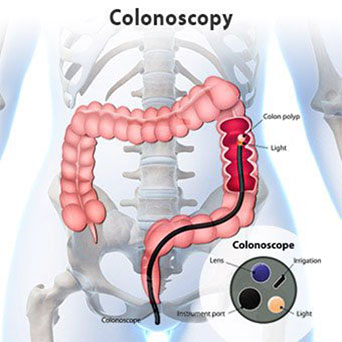
Why might a Colonoscopy be performed?
To investigate problems such as ano-rectal bleeding, constipation or abdominal pain. To screen for colon cancer or polyps.
For the treatment of certain causes of lower gastrointestinal bleeding or constipation.
The procedure
The colonoscopy procedure will usually take 30 to 60 minutes. It’s usually carried out as a day procedure, with most of our colonoscopies performed under conscious sedation, so you’ll be asked beforehand if you would like to be sedated. Under certain conditions, a general anaesthetic may be required, while some patients may choose to have the procedure fully awake. The procedure will usually be carried out by an endoscopist (surgical or medical gastroenterologist or a surgeon) and assisted by a nurse.
Preparing for a colonoscopy
If you’re referred for a colonoscopy, you’ll be told whether you need to stop taking any of your medications beforehand. Your colon will need to be prepared prior to your procedure, which will usually involve taking a laxative preparation to empty your colon. This preparation will usually commence 16 to 24 hours before your procedure, and you’ll have the details explained to you in your pre-operative consultation. You’ll usually be asked not to eat anything for 6 to 8 hours before the procedure, and to stop drinking liquids 2 to 3 hours before the procedure. Before the procedure begins, you’ll be asked to remove any glasses, contact lenses and false teeth.
Recovery
After the procedure, you’ll be taken to the recovery area. If you didn’t have a sedative, you can usually go home soon after the procedure is finished. If you had a sedative, you’ll need to rest quietly for a few minutes or hours until the sedative has worn off, and will need to arrange for someone to take you home and to stay with you for at least 24 hours. Even if you feel very alert, the sedative can stay in your blood for 24 hours and you may experience further episodes of drowsiness.
During this time, you should not:
- Drive
- Operate heavy machinery
- Drink alcohol
- Take sleeping tablets
- Go to work
- Sign any contracts or legal documents
- Be responsible for small children or dependents
Before you’re discharged, your endoscopist will explain the results of the procedure to you. You’ll be required to make a follow-up appointment to discuss your results. You’ll be told if you need to make any changes to your diet during the hours or days after going home. It’s normal to feel bloated for 24 to 48 hours after your procedure.
Contact us immediately if you develop signs of a more serious problem, such as:
- Severe or worsening stomach pain
- Passing dark or tar-like poo
- Persistent vomiting
- Vomiting blood
- Shortness of breath
- A temperature of 38°C or above
What are the risks?
A colonoscopy is very safe, but like all medical procedures, it does carry a risk of complications. These could include:
- A reaction to the sedative, which can cause problems with your breathing, heart rate and blood pressure
- Internal bleeding
- Perforation of the lining of your colon or rectum


